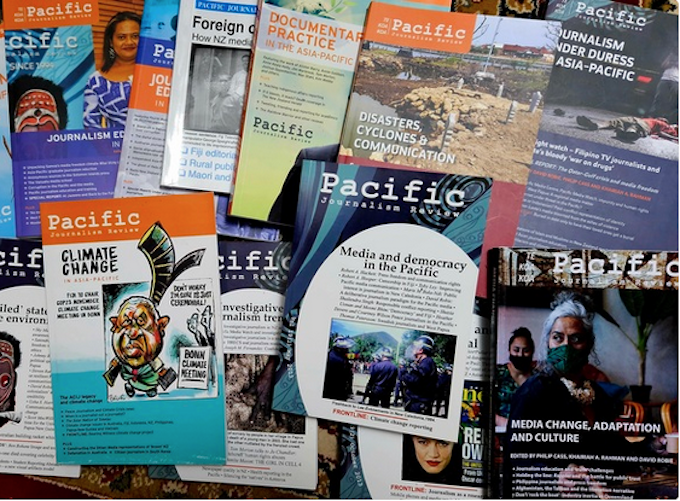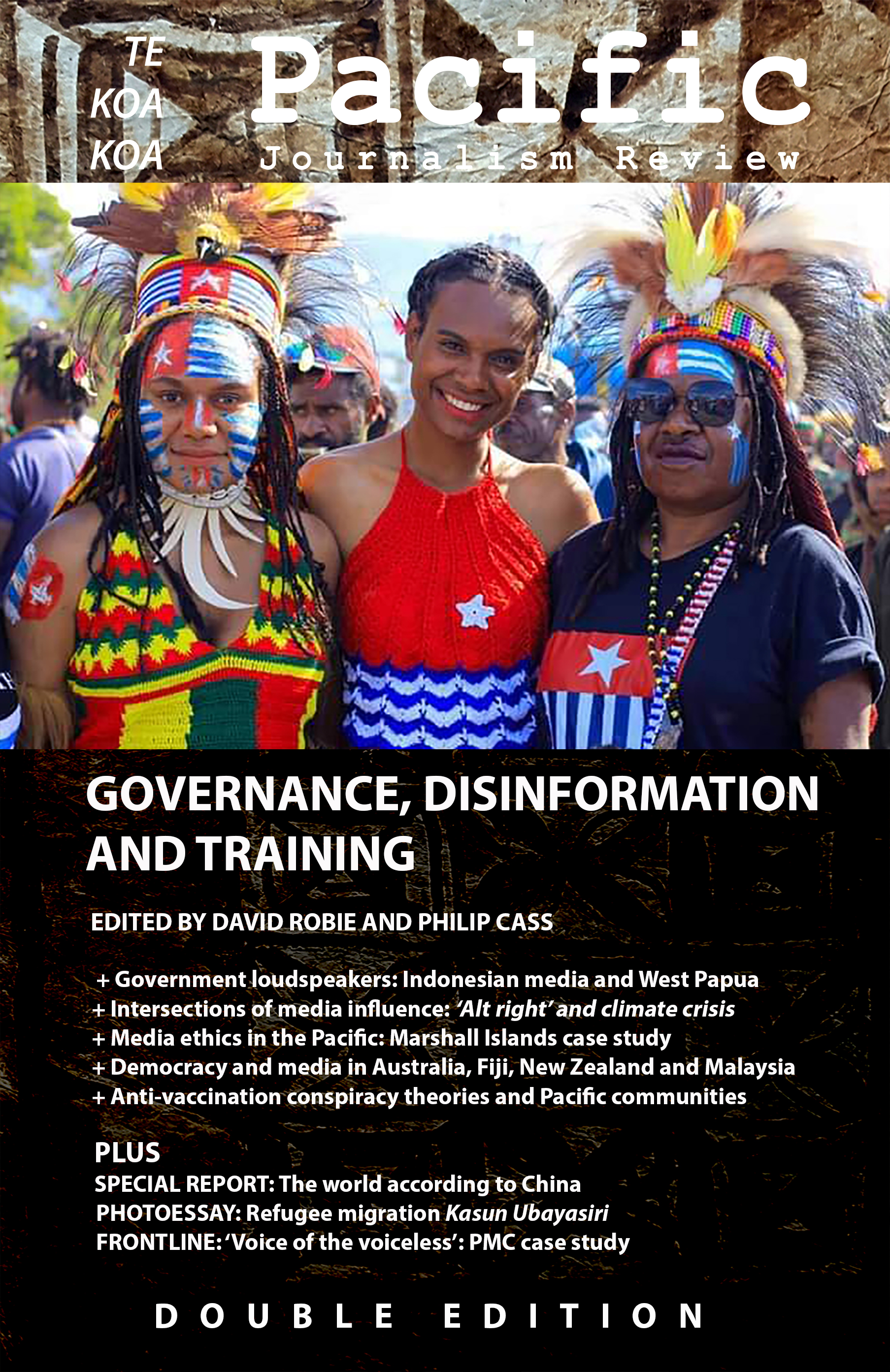
Back Issues
Abstracts of Vol 10 (1), April 2004
THEME
THE PUBLIC RIGHT TO KNOW: pp 9-28
Celebrity and scandal:
1. Going to the chapel: Same sex marriage and competing narratives of intimate citizenship
Marcus O’Donnell
Abstract: The public discourse about marriage oscillates between a story of the ideal and a story of the everyday. A range of symbolic references or myths are mobilised in media stories about marriage; this is particularly evident in the polarised debate around same-sex marriage. This article identifies and explores three of the myths that underlie the rhetoric in same-sex marriage stories: 1) the evolution/revolution myth; 2) the apocalypse myth and 3) the myth of the child. It also argues that the production of such stories has effects on the realm of ‘intimate citizenship’ (Plummer, 1995) and that it is through this contested storytelling that new identities and their attendant rights become possible
Spin and censorship:
2. Exposing and opposing censorship: Backfire dynamics
in freedom-of-speech struggles pp 29-45
Sue Curry Jansen and Brian Martin
Abstract: Censorship can backfire because it is usually viewed as a violation of the right to free expression, which is widely valued as an ideal; under the Charter of the United Nations, freedom of expression is a universal human right. Backfire occurs, for example, when censorious attacks on a film or book cultivate increased demand for the forbidden work rather than restrict access to it. Censors can inhibit this backfire effect in various ways, including covering up the censorship, devaluing the target, reinterpreting the action, using official channels, and using intimidation and bribery. These five methods to inhibit backfire from attacks on free speech are illustrated by a variety of cases, including attacks that backfired and ones that did not. This analysis provides guidance for effectively opposing attacks on free expression.
At the coalface:
3. Advocacy in the dark: Seeking justice for asylum seekers pp 46-56
Jo Gow and Mary Quilty
Abstract: Two members of the Australian refugee support NGO ‘ChilOut’ detail the lack of public access to Immigration Detention Centres (IDCs), to the detainees within them and to the policies and procedures governing such centres. ChilOut organises visits to IDCs so ordinary Australians can know and befriend detainees. However, stringent and sometimes arbitary control of IDC visitors mean their visits cannot ensure transparency. More formal written attempts to establish accountability such as ChilOut’s submission to the Human Rights and Equal Opportunity Commission (HREOC) inquiry into children in detention and ChilOut’s report on contractual compliance within IDCs have been dismissed or refuted by the Australian Government. Unaccountability also arises from confidentiality clauses in the 1998 contract between the Government and ACM (the private company which ran IDCs), the Government’s shielding of ACM from adverse publicity, contractual incentives to cover up negative incidences, and ‘commercial-in-confidence’ deletions from publicly available versions of the contract. This article argues that the lack of access to detention centres reaches its zenith on Nauru offering further proof that Australia’s current refugee policy is deliberately structured to hinder transparency and accountability.
Narrative struggles:
4. Reporting war: Grammar as ‘covert operation’ pp 58-74
Annabelle Lukin, David Butt and Christian Matthiessen
Abstract: While it is often said that ‘truth is the first casualty of war’, this aphorism covers only one feature of how wars are reported, namely, the deliberate use of misinformation by parties to a war. But language is by its nature a highly plastic resource: there is never just one way to report a set of events, even when the ‘facts’ may be uncontested. Drawing on data from newspaper reports and media briefings of the recent war in Iraq, we illustrate some of the basic grammatical systems which underlie the choices a journalist has to make, particularly in reporting ‘high impact’ events of the war. Using a functional approach to grammar – where grammar is seen not as rules but as a theory of reality – we introduce some basic grammatical concepts for understanding the ideological impact of different grammatical choices in construing the events of war.
Intellectual property:
5. ‘I have a patent lawyer on retainer!’ Intellect v intellectual property – a battle over the cultural commons? pp 76-88 James Arvantakis
Abstract: Over the last 20 years, markets have come to dominate the way ‘resources’ are managed. The expansion of the market doctrine has at its core the belief that appropriate private property rights are the best way to promote innovation and protect freedoms. The scramble over private property rights is now well entrenched in the intellectual property arena, with countless examples of patents entering areas that once seemed inconceivable. This article moves from Bollier’s (2002) discussion of the concept to argue that intellect, rather than being a commodity that is promoted by private property rights, is rather a commons – more specifically a ‘cultural commons’. As such, the process of commodification turns intellect into intellectual property – limiting its availability. As a commons, if intellect is to be promoted, it must be open and shared in the public sphere. In contrast to the ongoing commodification of all aspects of life, social movements and academics are beginning to rediscover the commons. This rediscovery now takes the battle between the dominant forces of free market fundamentalism and those who oppose them, into the cultural sphere.

6. The public right to know about science pp 89-101
Rosslyn Reed
Abstract: Journalism and science are two vocational occupations with roots deep in the momentous developments that ushered in the modern era (eg, Reformation, Enlightenment, democracy and the nation state). While science arises from the former, professional journalists remain committed to their role as the ‘watchdogs’ of democracy. While this has normally meant scrutiny of the acts of public figures like politicians and entrepreneurs, increasingly in late modernity attention has been turned to science and its potential for harm (eg, nuclear technology, genetic manipulation, etc.).
Free speech:
7. The sword of Damocles in the South Pacific: Two
regulatory case studies in Fiji, Tonga pp 103-122
David Robie
Abstract: Constitutional guarantees of free speech and media freedom are well established ‘on paper’ in most South Pacific nations. How these guarantees are interpreted is constantly a source of tension between politicians, media practitioners and constitutional advocates. Recent attempts by two countries in the region, Fiji and Tonga, to introduce draconian legislation have been partially successful, provoking international condemnation. In February 2003, a series of five bans on the Auckland-published Taimi ‘o Tonga newspaper led to conflict between the island kingdom’s Supreme Court and the Privy Council. This eventually provoked controversial constitutional changes that were adopted on October 16 in spite of unprecedented protests. These changes, in the form of the Media Operators Act 2003, Newspaper Act 2003 and Act of Constitution of Tonga (Amendment) Act 2003, are expected to effectively ban the paper for good and, according to some legal analysts, may end the rule of law. In Fiji, a draft Media Council of Fiji Bill was made public in May 2003 and submissions were invited. However, the proposed law stirred a strong reaction from the media and civil society groups as being ‘unconstitutional’. This article examines and analyses the debate over self-regulation and public accountability of the media versus state control in the South Pacific.
8. Press freedom and the High Court in the Callinan era:
Rethinking the rhetoric pp 123-138 Mark Pearson
Abstract: Justice Ian Callinan, appointed to the Australian High Court in 1998, challenged the rhetoric on the media’s role in society and its claims to press freedom with his minority decision in the Lenah Game Meats case in 2001. He questioned the notion of media freedom in an age where information providers are multinational corporations with a vested interest in the sale of news. Further, he challenged the claim of news organisations to special privileges on public interest grounds to the detriment of the rights of others. This paper uses qualitative analysis techniques to consider the comments of Justice Callinan and Justice Michael Kirby in the Lenah Case and four subsequent media-related cases in an attempt to develop a theory about the attitudes of these High Court justices towards the media. It finds five key themes emerging from their decision, headed by the expression ‘The Modern Media’, used by both Justice Callinan and Justice Kirby, which embodies many of these attitudes. The other key themes are the shift to considering media ‘just another business’, the self-appointed role of judges as reporting experts, the ascendancy of privacy over press freedom, and the challenge to some legal privileges with which the media have become comfortable.
9. Freedom of speech issues in Toohey v Peach and a hypothetical variant of that case pp139-152 Patrick Keyzer
Abstract: The purpose of this article is to consider the tensions within Australian free speech jurisprudence based on a hypothetical variant of the facts of the decision of the Supreme Court of the Northern Territory in Peach v Toohey. In particular, this article briefly explores the competing legal interests that operate when journalists seek access to restricted areas, in this case aboriginal land, in the course of an investigation. After considering the case and the issues it raises the author develops a hypothetical that draws out some of the deeper tensions in this area of the law. The article concludes with proposals for new approaches to the test developed by the High Court of Australia in Lange v Australian Broadcasting Corporation for the balancing of freedom to discuss political and governmental affairs – including the public right to know – against other legitimate objectives such as the maintenance of property rights and the privacy interests that can be associated with property rights.
Radical and student press:
10. Ratbags, revolutionaries and free speech:
The Queensland radical press in 1968 pp153
Alan Knight
Abstract: Australian governments have made continuing attempts to restrict the public’s right to know. This article looks back to 1968 when radical Queensland university students challenged state government restrictions on freedom of speech, assembly and information. They did so by using then new offset press technology to create alternatives to a mainstream press monopoly. In a world without internet, community radio and television, or even mobile phones, leaflets and small newspapers were the primary media for such minority groups wishing to spread their critiques to the wider community. The article examines the radical newsletter’s themes including freedom of speech, civil liberties, Australian racism, press ownership and the anti-war movement. It includes references to Queensland produced cartoons and posters. It was produced with material from the Fryer Library at the University of Queensland.


Vol 16(1) May2010
Vol 15(2) Oct2009
Vol 15(1) May2009
Vol 14(2) Oct2008
Vol 14(1) Apr2008